Company
Product
Role
Duration
Platform
Aya Healthcare
Predictive Staffing
Senior Product Designer (IC)
2024 - Present
Enterprise Web (B2B Saas)
Enabled healthcare organizations to proactively identify staffing gaps before they occurred
Improved staffing efficiency and reduced reactive scheduling decisions
Contributed to enterprise adoption as part of Aya’s Workforce AI product suite-
Healthcare staffing teams often operate in a reactive mode — responding to shortages only after they impact operations.
Existing staffing processes:
Relied on historical data rather than forward-looking insights
Made it difficult to identify risk until gaps became urgent
Required manual coordination across multiple systems and teams
The challenge:
Design a predictive staffing experience that surfaces risk early, enables proactive action, and integrates naturally into existing staffing workflows — without creating alert fatigue or mistrust in AI recommendations.
I led product design for Predictive Staffing from early concept through enterprise launch, working closely with:
Product Management
Engineering
Data Science
Operational stakeholders
Sales and Executive teams
Responsibilities included:
Shaping product experience strategy in a highly ambiguous domain
Translating predictive models into actionable staffing insights
Designing workflows that supported proactive decision-making
Prototyping concepts used in executive reviews and enterprise sales
Primary users:
Staffing coordinators
Workforce planners
Operational leaders
These users needed to:
Identify potential staffing gaps before they became urgent
Prioritize limited staffing resources effectively
Take action quickly when risk was identified
Key constraint:
Staffing decisions were time-sensitive and high-impact — false positives or unclear recommendations could erode trust and slow adoption.
Prediction confidence: Users needed to understand how likely a staffing gap was to occur
Alert fatigue: Too many warnings would reduce effectiveness
Workflow fit: The product had to integrate into fast-paced staffing operations
Trust in automation: Recommendations needed to feel supportive, not prescriptive
These constraints guided both interaction and visual design decisions.
Rather than treating predictions as static alerts, I focused on:
Risk-based prioritization over binary warnings
Action-oriented insights instead of raw predictions
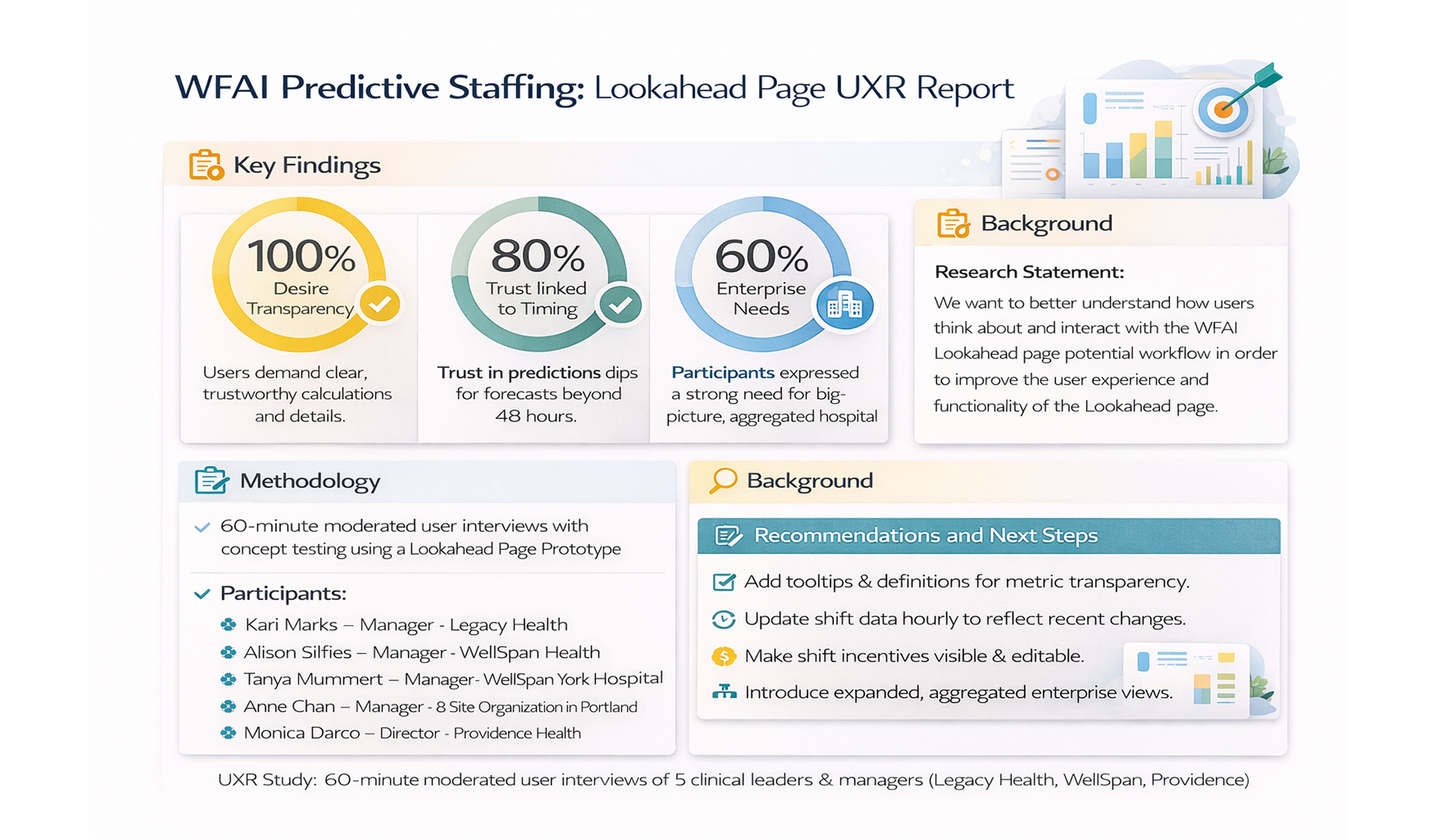
Contextual explanations that built trust without slowing workflows
Close collaboration with Data Science ensured the UI reflected both model behavior and real-world staffing realities.
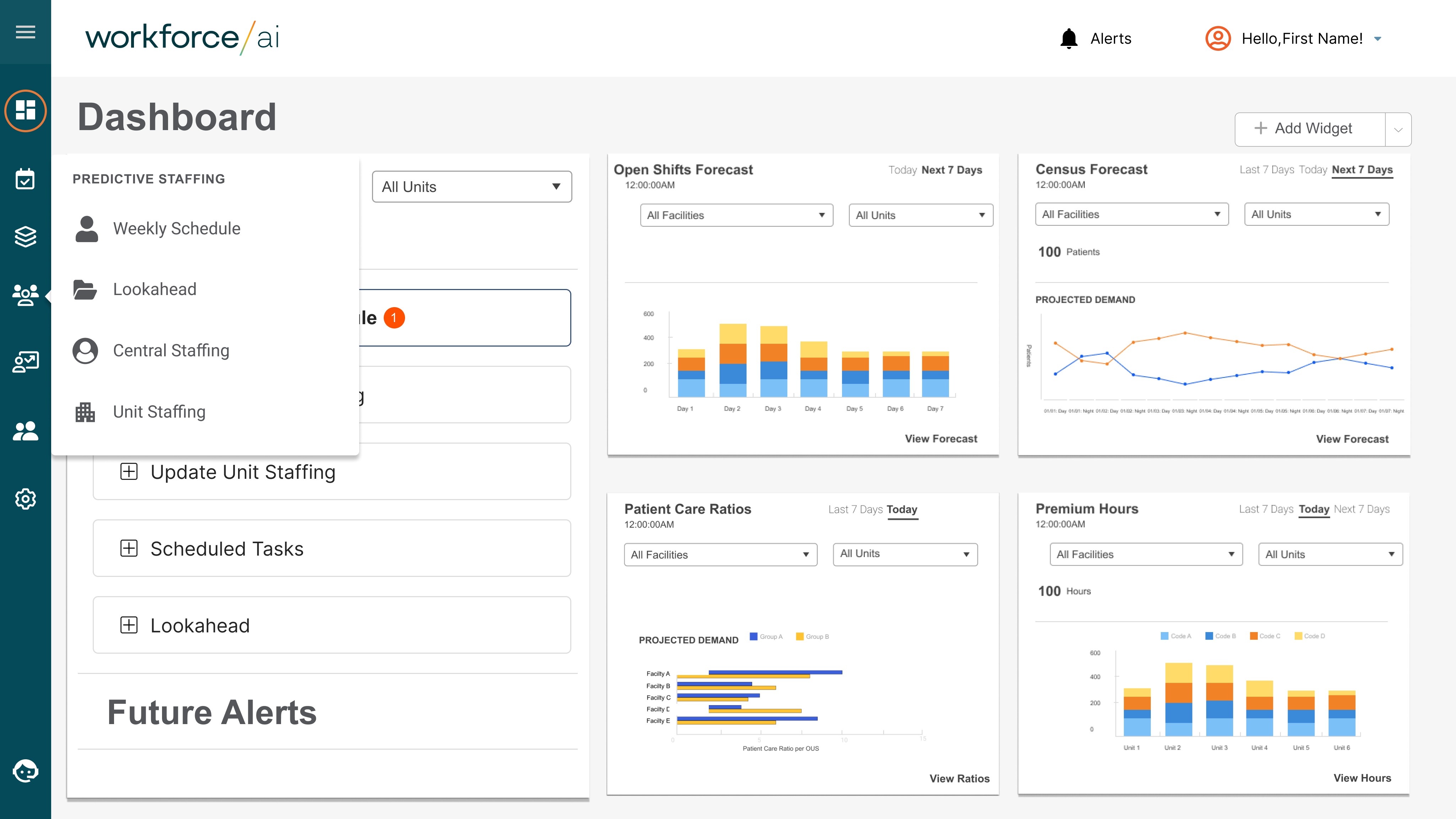
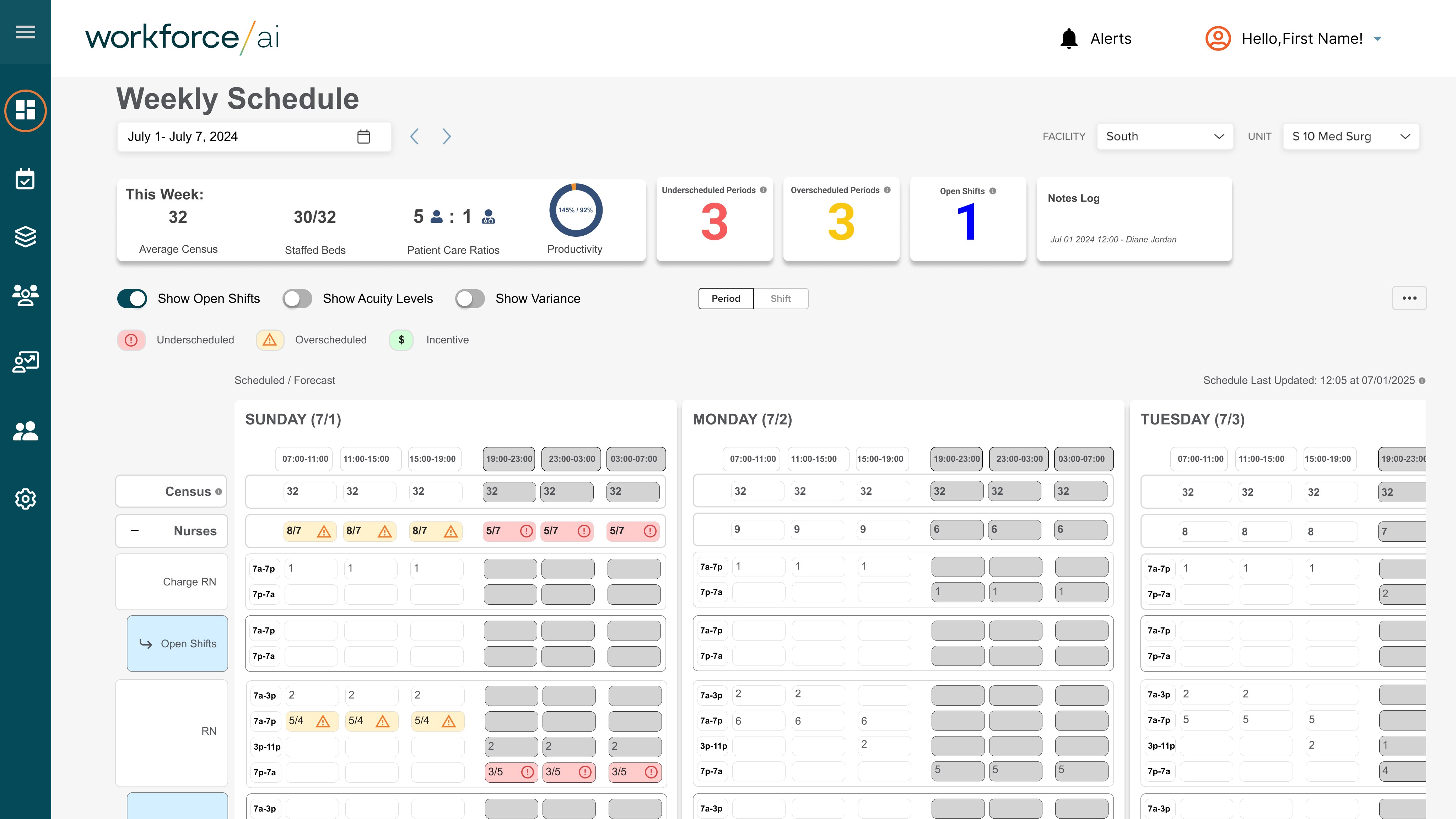
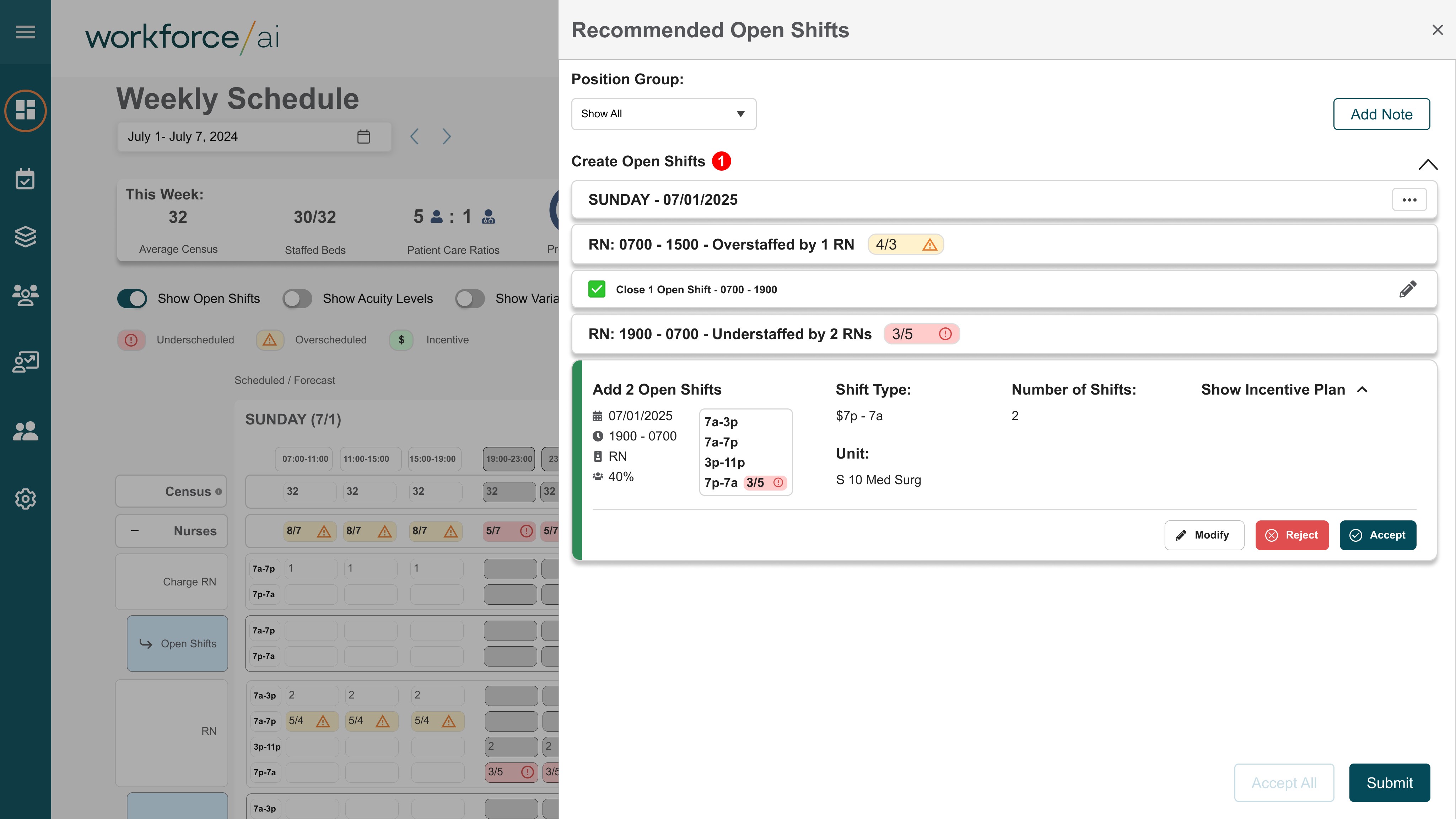
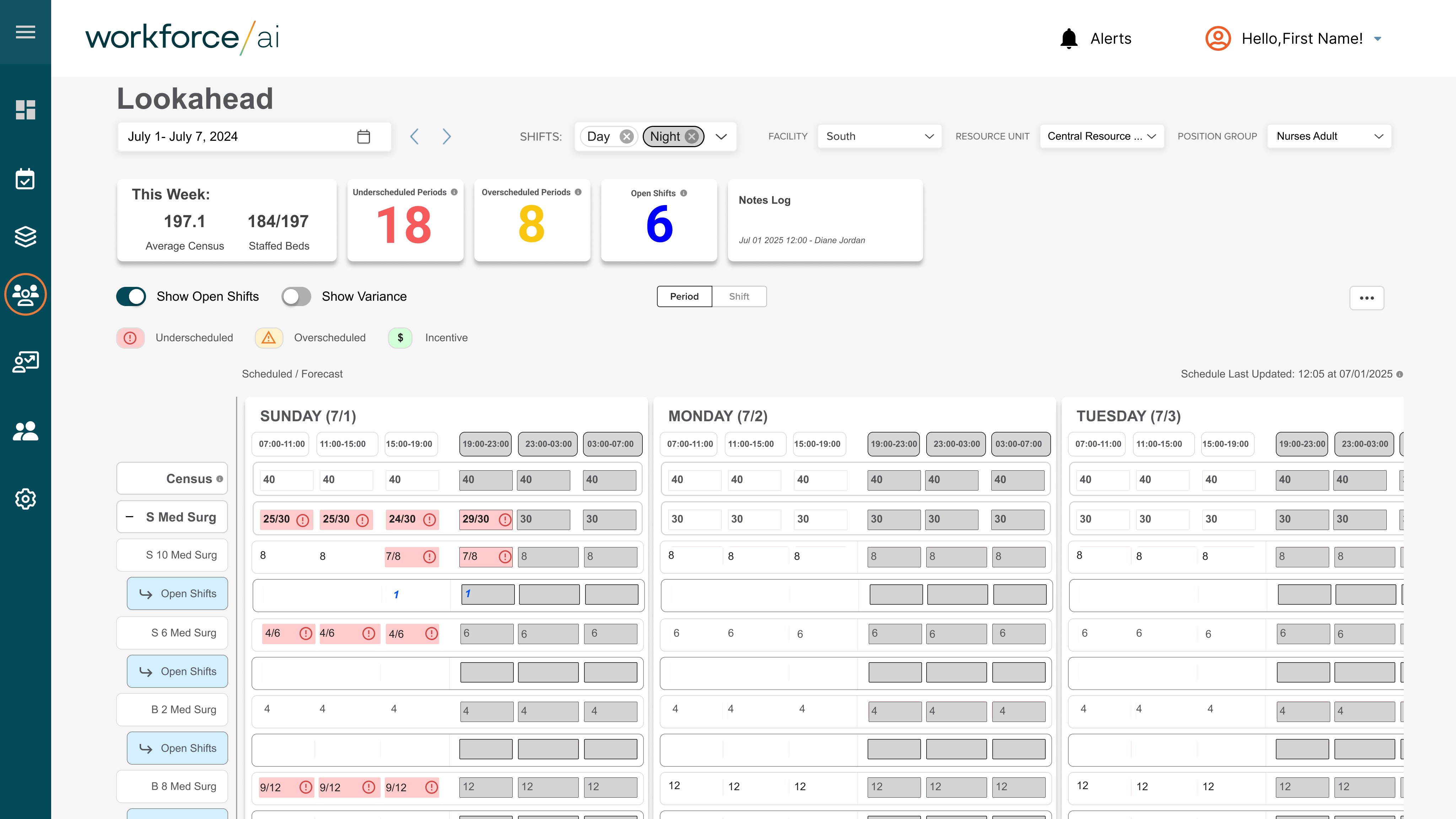
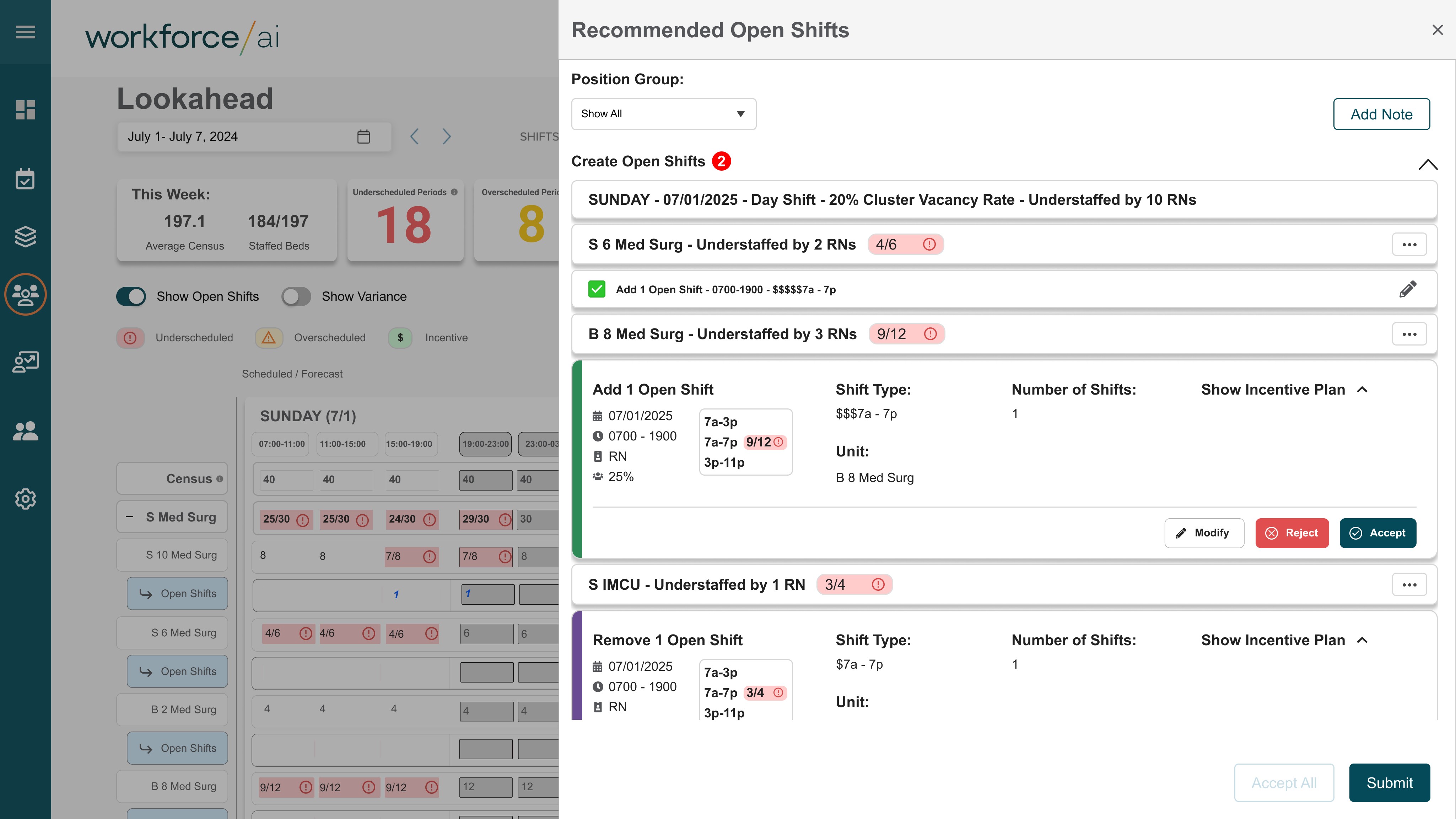
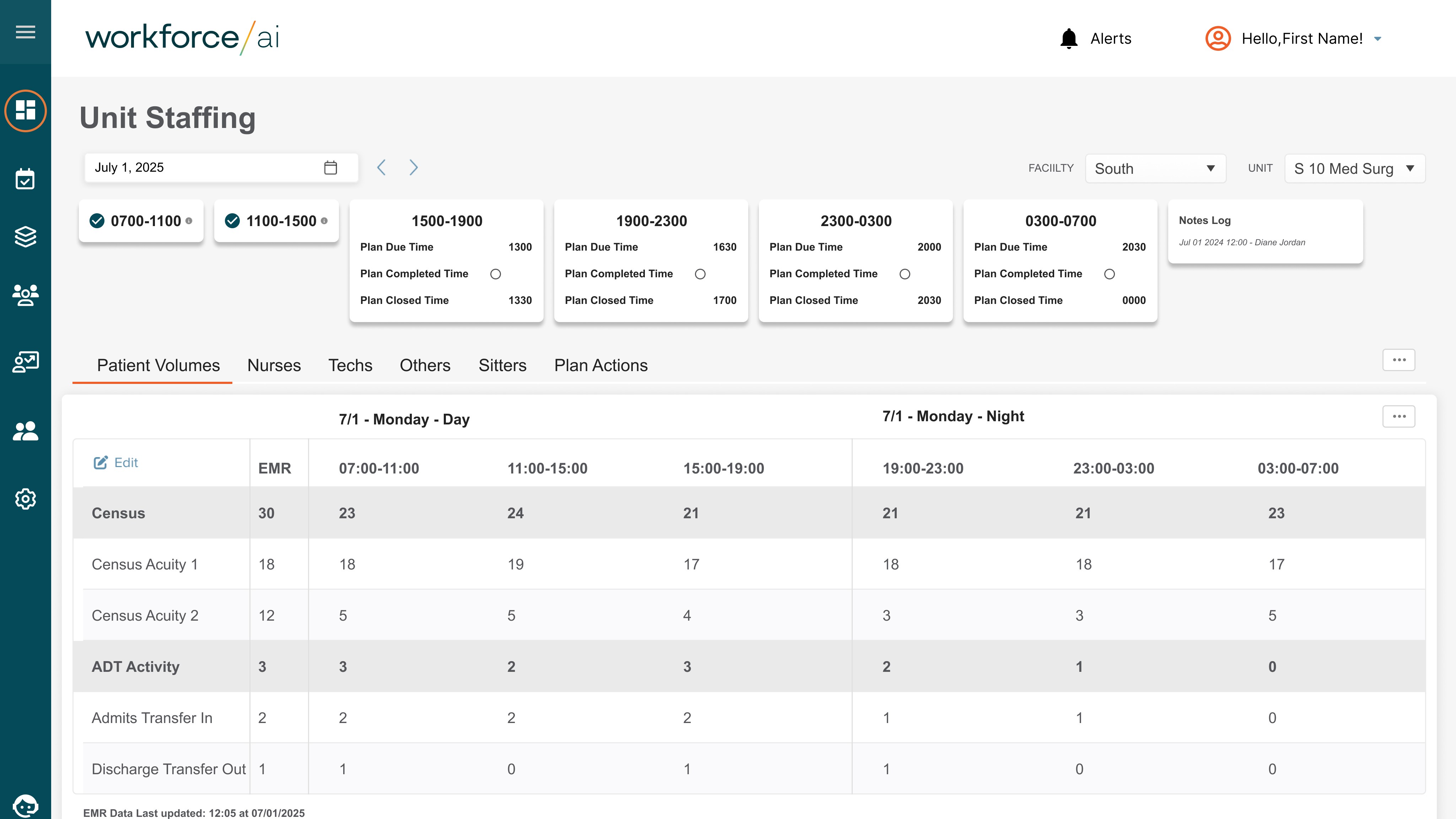
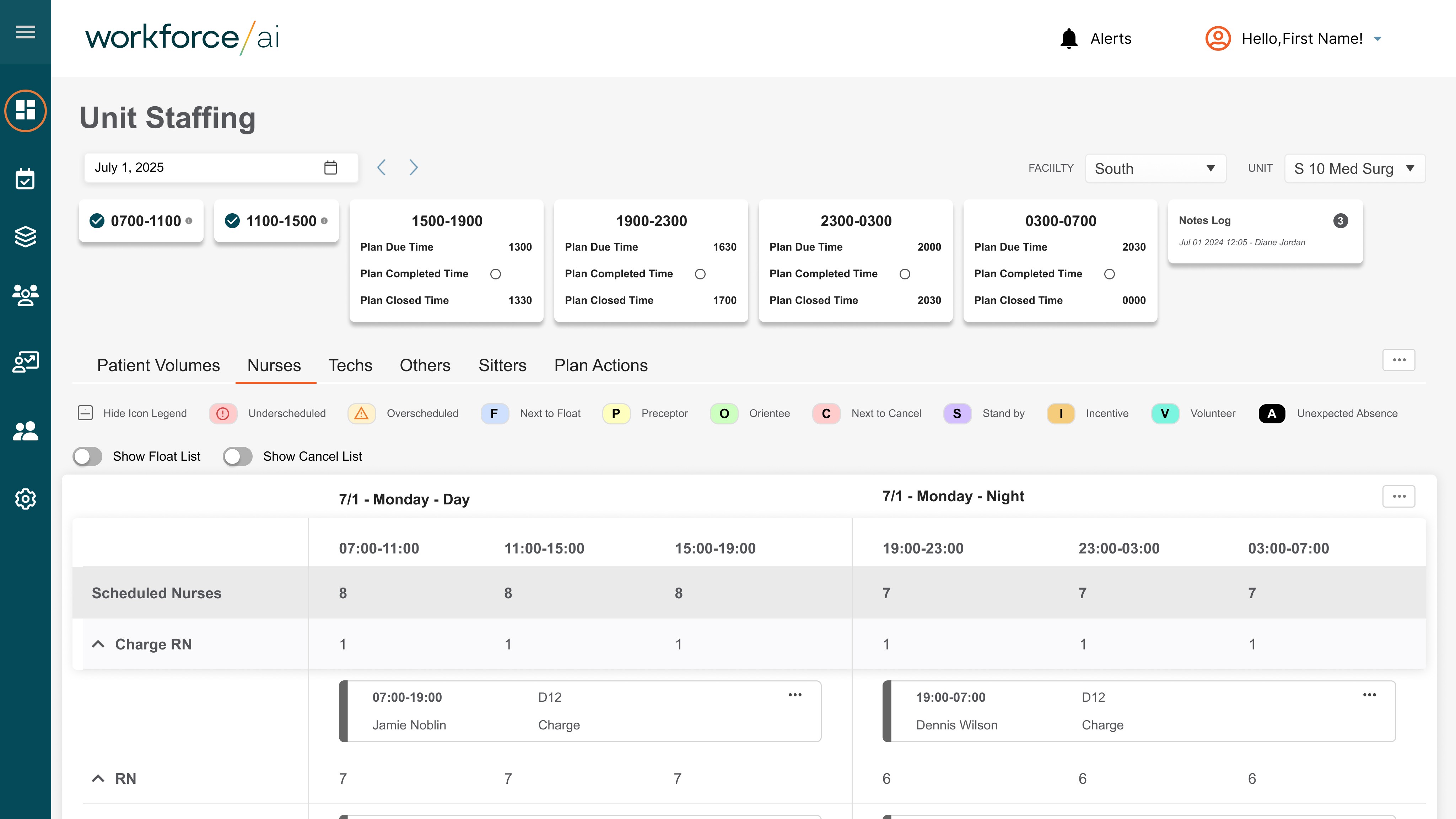
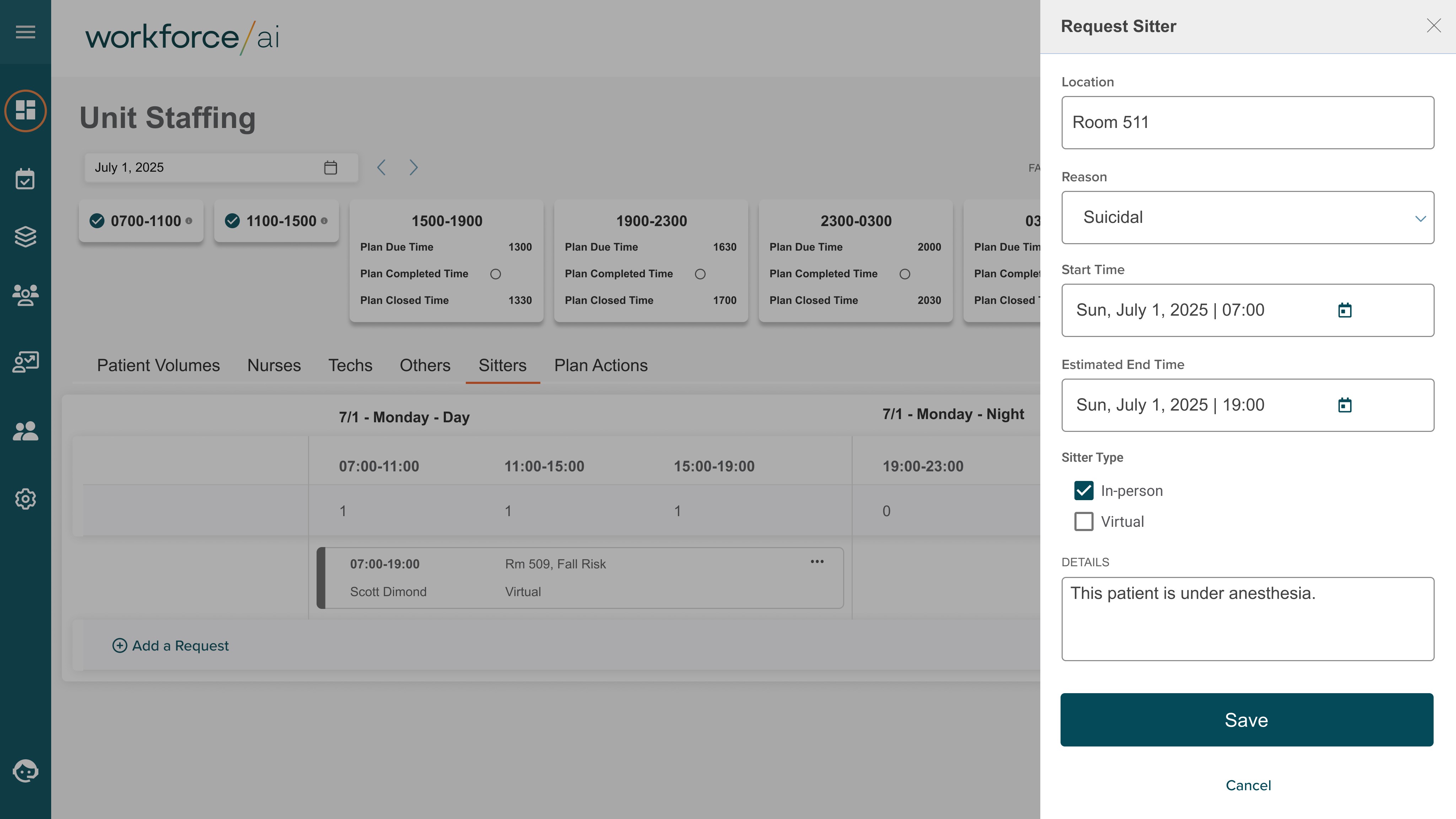
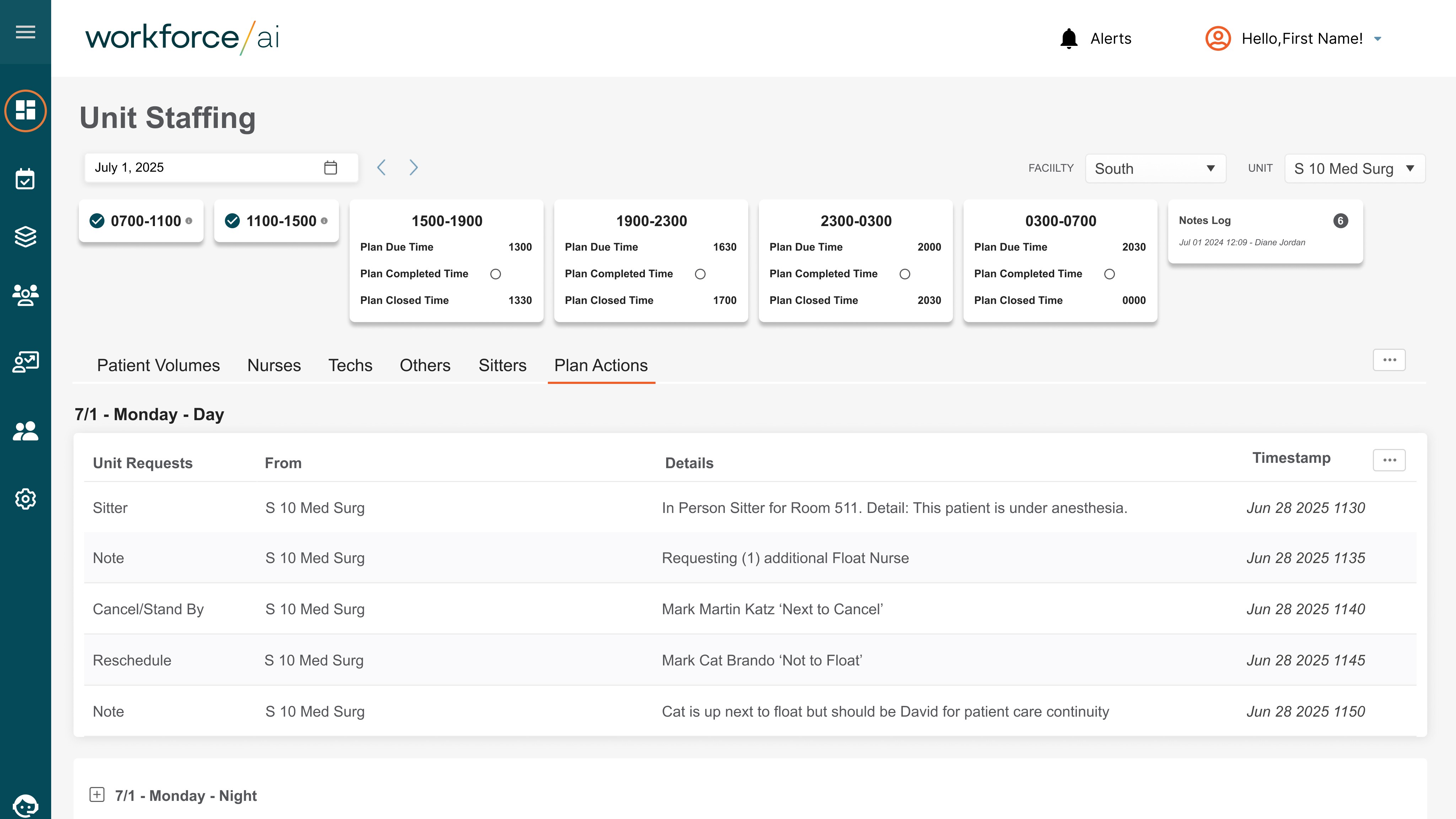
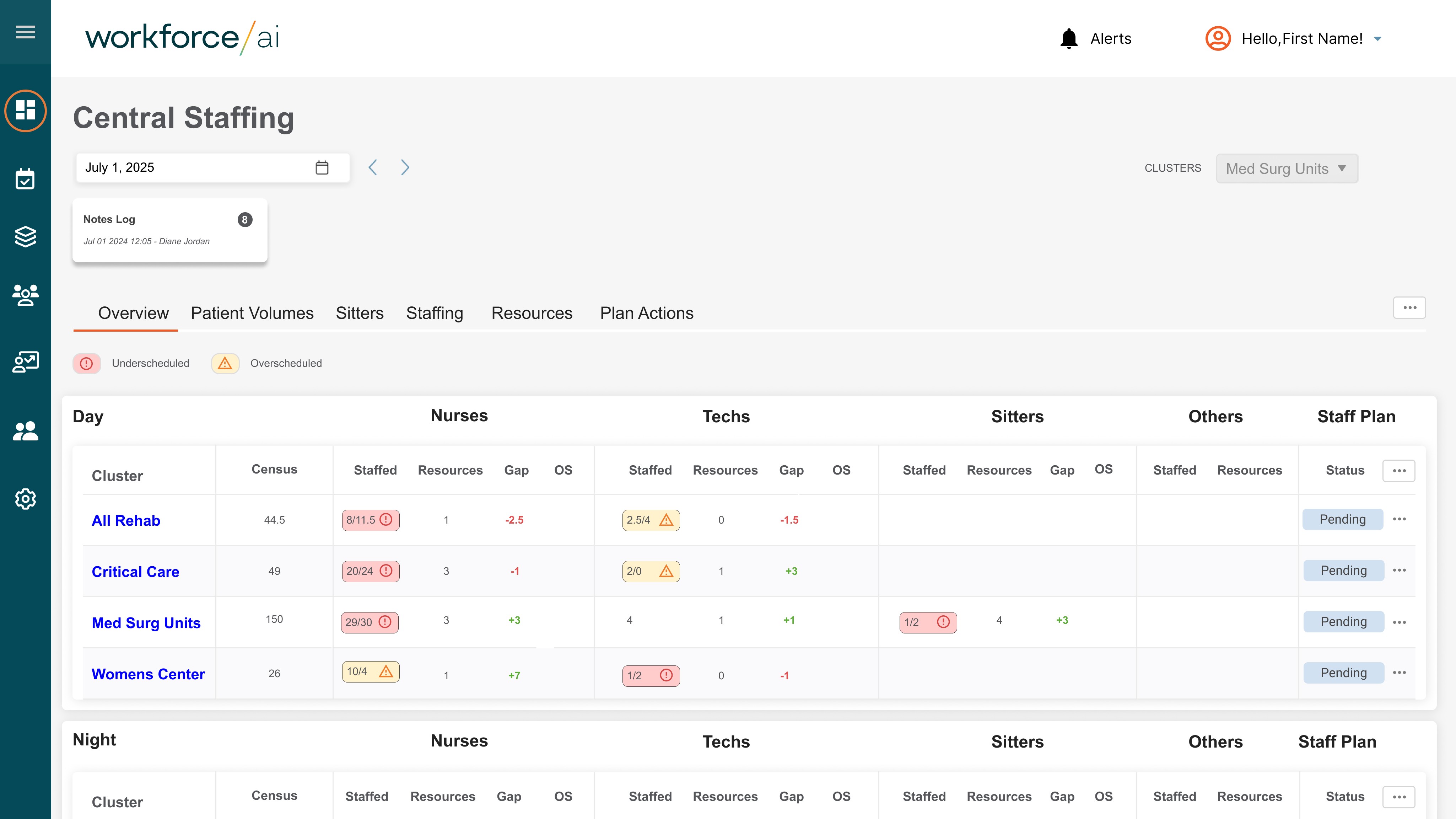
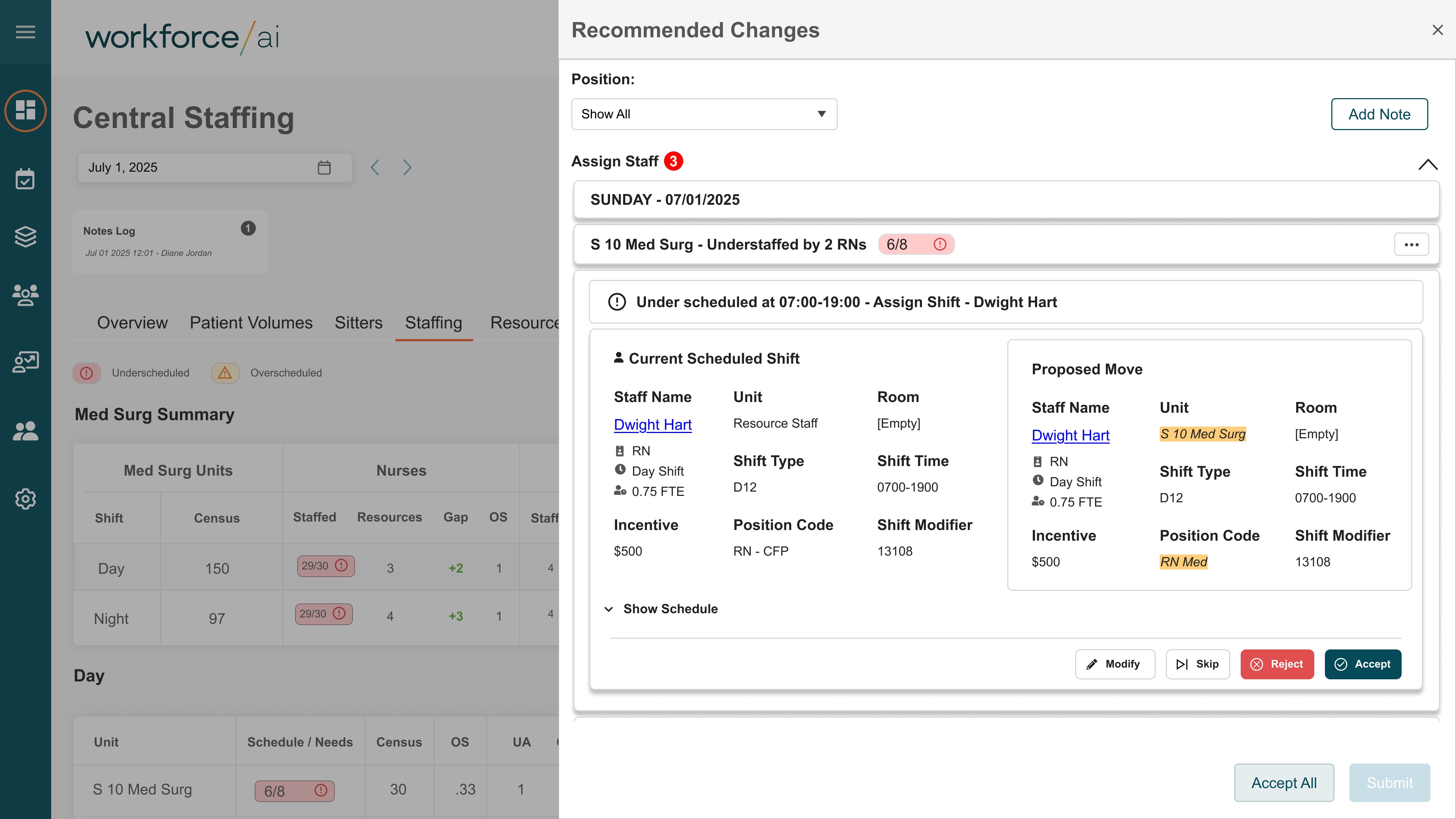
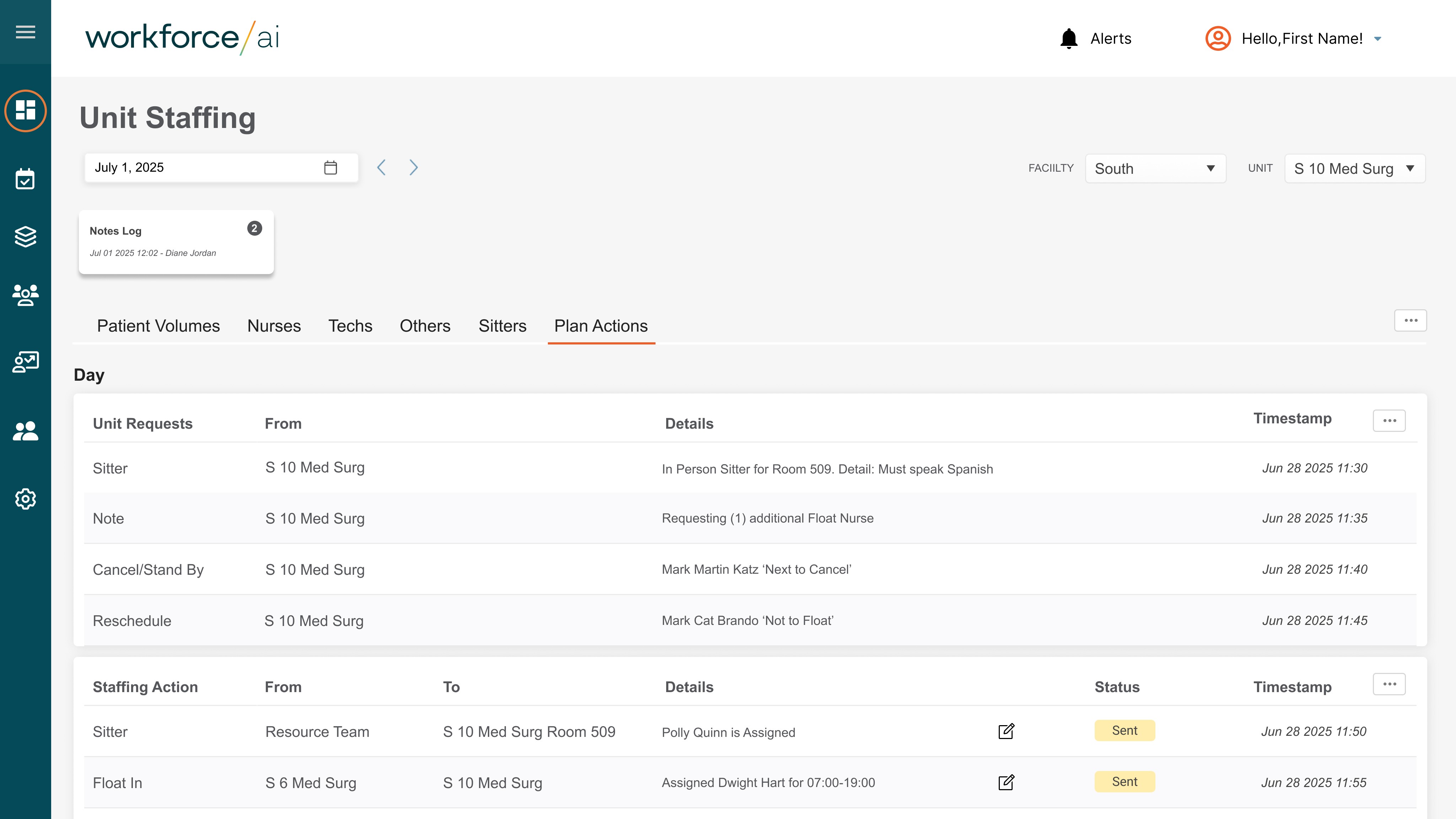
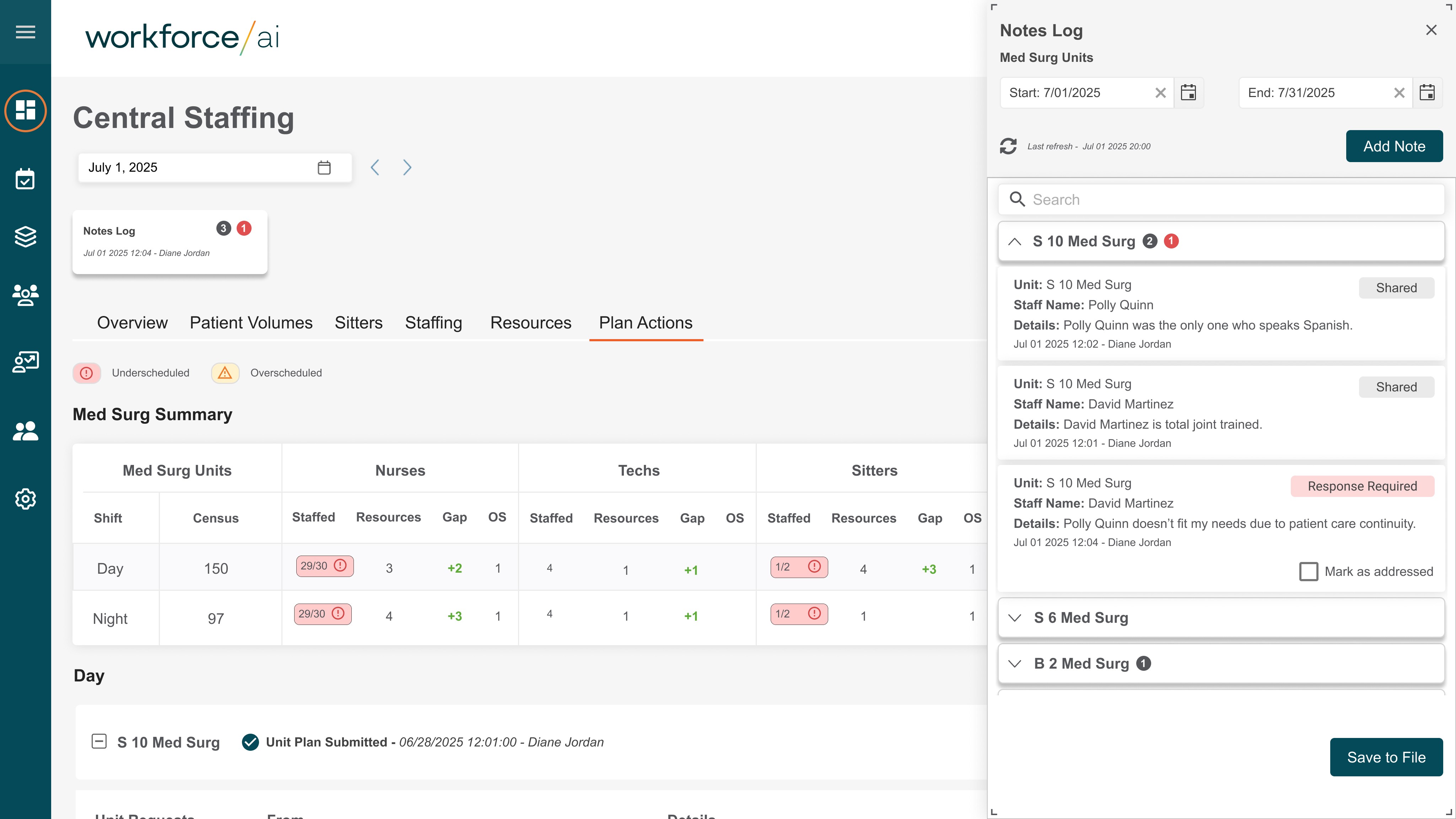
The final Predictive Staffing experience included:
Risk-based staffing forecasts highlighting potential gaps
Prioritized recommendations aligned with operational urgency
Clear explanations to support trust in predictive insights
Seamless integration into existing staffing workflows
The product helped teams shift from reactive firefighting to proactive staffing management.
Predictive Staffing became a core feature within Aya’s Workforce AI platform
Operational teams identified staffing risks earlier and acted more decisively
Reduced last-minute staffing interventions and improved planning confidence
Strengthened Aya’s enterprise AI value proposition in sales and RFP discussions
This project reinforced several design principles:
Predictive tools must prioritize interpretability over precision
Trust is built through transparency and control, not automation
Aligning AI insights with existing workflows accelerates adoption
If revisiting this work, I would explore:
Personalization of risk thresholds by organization
Deeper feedback loops to improve prediction accuracy over time
Expanded cross-product integrations within the Workforce AI ecosystem